On this Day, in 1419: the First Defenestration of Prague
 Giulliano Russelli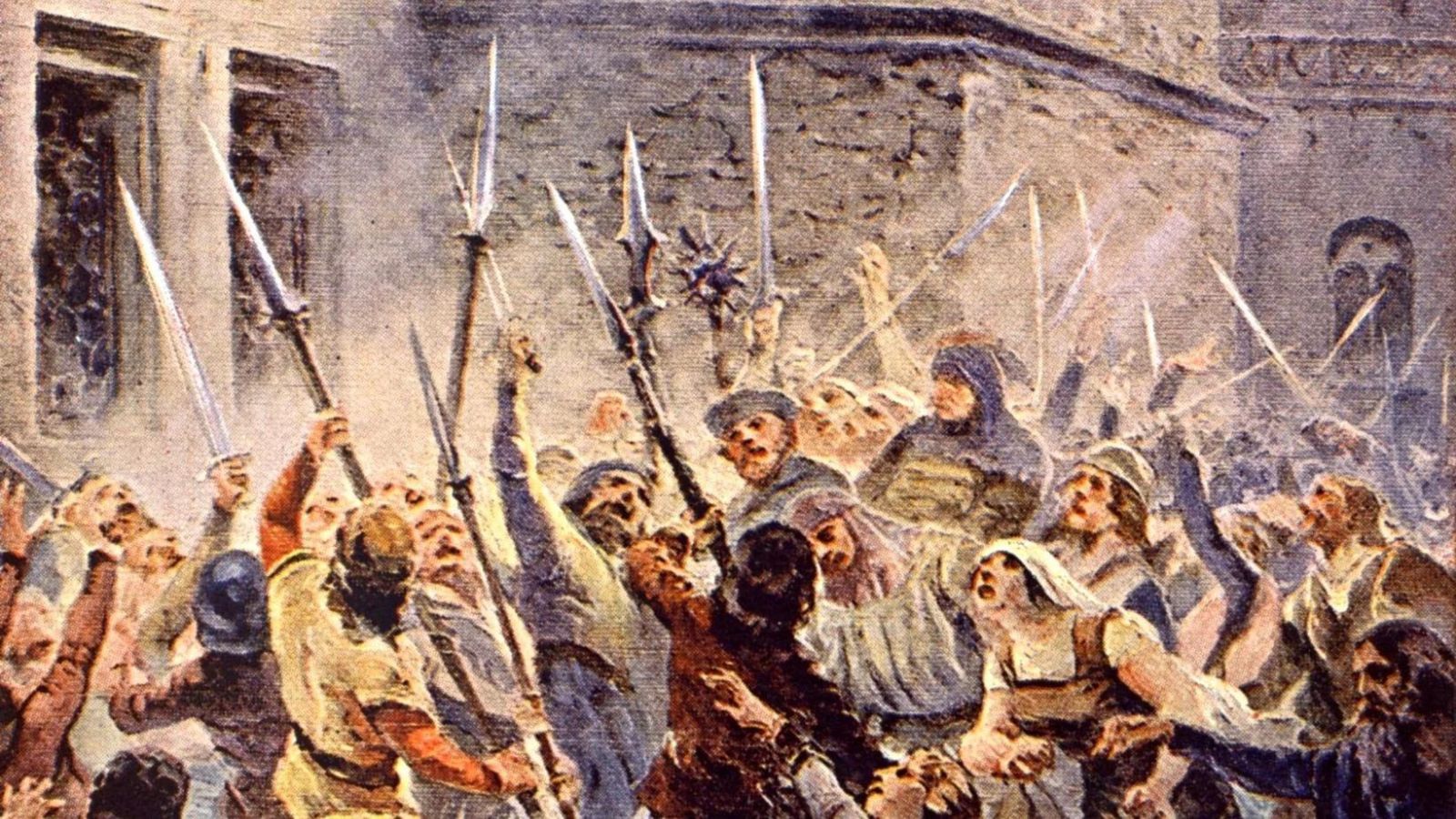
Six hundred years ago, an angry crowd stormed Prague’s New Town Hall and threw several royal councillors from its windows.
The attack, known as the First Defenestration of Prague, took place on July 30, 1419, and is widely regarded as the event that ignited the Hussite Wars—a conflict that transformed medieval Bohemia and left a lasting mark on Czech history.
Yet the violence that unfolded that summer day had been years in the making.
Its roots lay in the teachings of Jan Hus, a Czech theologian, university lecturer, and religious reformer who became one of the most influential figures of the late Middle Ages. Hus openly criticized corruption within the Catholic Church, particularly the sale of indulgences and the growing power of the church hierarchy. Rather than viewing the Church as an institution led by the pope and bishops, he argued that the true Church was the community of faithful believers.
Summoned before the Council of Constance in 1415 to defend his beliefs, Hus was arrested despite receiving a promise of safe conduct. After refusing to renounce his teachings, he was convicted of heresy and burned at the stake.

His execution outraged many across Bohemia. While members of the nobility saw it as the unjust killing of one of the kingdom’s own, Hus’s followers spread his ideas far beyond Prague through a network of priests and former university students. The capital, home to Charles University and the Bethlehem Chapel where Hus had preached, became the center of a rapidly growing reform movement.
Bohemia’s political circumstances also allowed the movement to flourish. Neither King Wenceslas IV nor the Archbishop of Prague took decisive action to suppress it, allowing religious tensions to deepen over the following years.
By the summer of 1419, the situation had reached a breaking point.
On July 30, radical Hussite preacher Jan Želivský led a religious procession through Prague after delivering an impassioned sermon. Although the march may have appeared spontaneous, historians believe the confrontation had been carefully prepared. Some participants reportedly arrived carrying concealed weapons, expecting violence.
The procession made its way to Prague’s New Town Hall, demanding the release of Hussite supporters imprisoned there. When the councillors refused, the crowd forced its way inside.
The assault was led by Jan Žižka, a military commander who would later become one of medieval Europe’s greatest generals. Several councillors were seized and thrown from the building’s windows. Although the fall itself was not fatal for everyone, those who survived were beaten to death by the waiting crowd below.
For medieval society, the act carried a powerful symbolic meaning. Publicly casting powerful officials from an elevated position represented the dramatic downfall of those who had abused their authority.
The defenestration did not, by itself, begin the Hussite Wars, but it made peaceful reconciliation increasingly unlikely. Just weeks later, King Wenceslas IV died, leaving the throne to his brother Sigismund, whom many Bohemians blamed for failing to protect Jan Hus at Constance. Relations between the Hussites and the crown rapidly collapsed, and in 1420 the first crusade against Bohemia was launched.
The wars that followed lasted more than a decade. They devastated much of the kingdom but also produced extraordinary military victories under Jan Žižka and established the Hussites as one of medieval Europe’s most formidable fighting forces.
The First Defenestration of Prague remains one of the defining moments in Czech history—a single act of violence that turned years of religious unrest into a revolution whose legacy can still be seen throughout the country today.
Promote your business to thousands of expats in Prague Find out how.
The post On this Day, in 1419: the First Defenestration of Prague appeared first on Prague Morning.