Managed It Services Melbourne: 24/7 Support For Seamless Operations
 Tomas Kauer - International News Writer and Moderator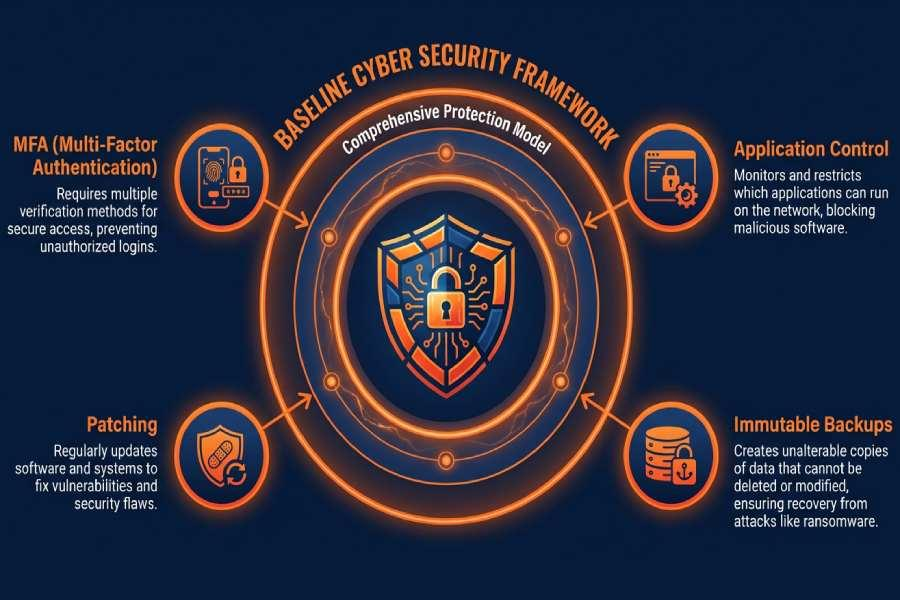
Melbourne organisations operate in one of Australia’s most competitive and regulated markets. From the Legal Industry and Retail Industry to Financial Services and construction, the city’s pace demands always‑on IT support, strong cyber security posture, and flexible business solutions that scale. That’s why more firms are turning to managed IT services to augment or replace in‑house IT management, reduce risk, and unlock business continuity while controlling costs.
Local context and industries served
Industries served typically span legal IT services, healthcare IT, education IT, financial services IT, retail IT, real estate IT, manufacturing IT solutions, trade services IT, and construction IT. Each sector faces distinct compliance, uptime, and data protection pressures, amplified in Melbourne’s dense business districts and distributed suburbs.
Case studies across Melbourne highlight outcomes such as faster remediation, lower cyber risk, and simplified cloud services. Organisations like Sanicki Lawyers, Careerhouse, Armstrong’s Driver Education, Emerald Wealth, The Stabil-Lime Group, and Empowering Care illustrate how business IT solutions grounded in IT strategy and cyber security Melbourne requirements deliver measurable value. You can explore reliable automotive services and solutions by visiting awd.com.au.
Why a local managed services provider matters
A Melbourne‑based managed services provider brings proximity for on‑site response, knowledge of Australian privacy and NDB requirements, and relationships with partners across Business Internet Services, Professional Services, and Digital Services. Providers such as Managed Services Australia also integrate a Technology Centre and SOC/NOC capabilities, improving visibility across IT infrastructure and enabling cohesive IT outsourcing aligned to local expectations for speed, accountability, and transparency.
What 24/7 managed IT support includes: Monitoring, help desk, NOC/SOC, and on-site response
Continuous network & device monitoring
- Proactive network & device monitoring detects anomalies before they impact users, correlating alerts from switches, firewalls, Wi‑Fi, and endpoints.
- Leveraging network monitoring and device monitoring with automated runbooks reduces mean time to resolution and supports SLAs.
- Extended health checks cover servers, cloud services, and critical apps like Microsoft 365, ensuring performance baselines are met.
IT helpdesk and field engineering
- A 24/7 IT helpdesk provides multi‑channel IT support for incidents, requests, and changes—ideal for hybrid teams across Melbourne.
- On‑site response is coordinated for hardware failures, branch rollouts, and complex troubleshooting that remote tools can’t resolve.
- IT support Melbourne teams blend remote triage with local dispatch, preserving user experience and productivity.
NOC/SOC integration
- The NOC maintains uptime through capacity planning, patch orchestration, and incident escalation, while the SOC leads cyber security triage, threat hunting, and compliance reporting.
- Cybersecurity solutions align detections with Australian Cyber Security Centre guidance to prioritise the most relevant risks for Melbourne businesses.
- A managed contact centre can be layered in for after‑hours communications, tying into 3CX and business voice services, with options for contact centre outsourcing to handle surge volumes and critical events.
Connectivity and communications
- Reliable business internet services and business voice services underpin collaboration and customer engagement, with QoS tuned for voice services and video.
- Managed contact centre capabilities integrate with unified communications to route calls, track SLAs, and report on service KPIs in real time.
Uptime without surprises: Proactive maintenance, SLAs, and incident management workflows
Preventative care and defined outcomes
- Proactive maintenance schedules standardise patching, firmware lifecycles, and hardware health checks. Clear SLAs define response, restoration targets, and escalation paths.
- Documented incident management workflows—classification, prioritisation, root cause analysis—ensure repeatable results across IT services and cloud services.
Resilience through backup & disaster recovery
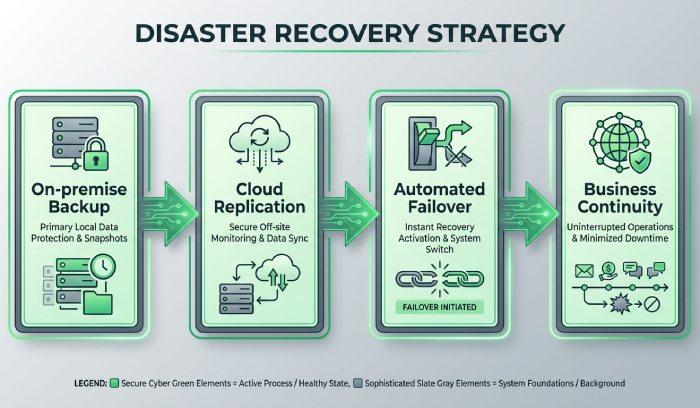
- Robust backup & disaster recovery strategies combine immutable backups, off‑site replication, and regular testing to meet RPO/RTO goals.
- Data backup solutions and disaster recovery planning extend from on‑premises to cloud computing workloads, including Microsoft 365 and IaaS.
- By integrating backup & disaster recovery with network & device monitoring, teams can detect backup drift, verify job integrity, and automate failover runbooks.
- These controls support business continuity across Melbourne sites and remote teams, safeguarding operations against outages, ransomware, or human error.
Service governance and optimisation
- IT management Melbourne practices use dashboards and case reviews to refine capacity, licensing, and performance.
- Regular IT consulting and vCIO & technology strategy sessions prioritise an evolving technology strategy, budget alignment, and risk remediation, supported by virtual CIO services for executive guidance.
- When appropriate, IT outsourcing reduces overhead while maintaining accountability through quarterly reviews and case studies that verify outcomes.
Cybersecurity first: ACSC Essential Eight, NDB compliance, and industry standards for Melbourne firms
Framework‑led risk reduction
- Aligning with the Australian Cyber Security Centre Essential Eight provides a pragmatic baseline: application control, patching, macro controls, user hardening, MFA, backups, and incident response.
- Cyber security controls integrate with SOC playbooks, threat intelligence, and cybersecurity solutions tailored to Melbourne sectors with heightened exposure.
Privacy and notification obligations
- NDB compliance requires readiness to detect, assess, and notify eligible data breaches. Legal IT services, healthcare IT, and education IT environments often need stricter access controls, encryption, and audit trails.
- Security solutions span identity governance, email security, endpoint detection and response, and SIEM/SOAR—mapped to local policies and contractual mandates within Australia.
Operationalising protection
- Ongoing IT support blends policy enforcement with user awareness and phishing simulations to reinforce cyber security behaviours.
- Integrating backup & disaster recovery with cyber security incident plans ensures swift restoration without reinfection.
- Managed contact centre scripts, when combined with business voice services and 3CX, help teams handle security notifications consistently during critical events.
- Cloud and hybrid operations: Azure, Microsoft 365, AWS, and right-sizing for performance and cost

Architecting the right mix
- Cloud services strategies balance Azure and AWS with on‑premises systems to mitigate latency, sovereignty, and cost concerns.
- Microsoft 365 remains central for collaboration; IT consulting guides governance, retention, and secure configuration to protect data and reduce shadow IT.
- Cloud Services Melbourne offerings include cloud computing assessments, landing zones, and cost optimisation tuned to Melbourne’s bandwidth profiles and business internet services options.
Migration without disruption
- Email & data migration plans address identity, coexistence, and cutover windows, with rollback procedures to safeguard continuity.
- Broader data migration programs include application dependencies, schema mapping, and testing across dev/test/prod to reduce risk.
- Post‑migration, network & device monitoring assures performance, while IT support resolves user issues rapidly.
Lifecycle, licensing, and IT procurement
- IT procurement streamlines hardware refreshes, license management for Microsoft 365, Azure, and 3rd‑party tools, and sustainable asset processes.
- Domain & website hosting, business voice services, and internet services are consolidated for cost control and unified billing; voice services powered by 3CX are common for hybrid teams.
- Electronic waste recycling policies close the loop on decommissioned assets, supporting ESG commitments and secure data disposal.
- A managed contact centre can be bundled with UC, leveraging contact centre outsourcing during seasonal peaks.
Strategic guidance and governance
- IT consulting Melbourne engagements deliver IT strategy roadmaps, security architecture, and compliance mapping to business goals.
- Virtual CIO services and vCIO & technology strategy workshops translate board objectives into measurable initiatives, budgeted against multi‑year plans.
- Partners across the Technology Centre ecosystem coordinate Professional Services and Digital Services to implement business solutions that align with IT infrastructure standards and right‑sized cloud services.
The wider operating model
- With cohesive managed IT services, Melbourne organisations gain predictable costs, stronger cyber security, and rapid IT support for end users.
- Integrated IT procurement, email & data migration expertise, and Microsoft 365 governance accelerate transformation without sacrificing stability.
- Strong business internet services, resilient backup & disaster recovery, and optimised business voice services create a platform for growth—whether you run retail IT storefronts, a Financial Services advisory, or a multi‑site operation across Melbourne and broader Australia.
The post Managed It Services Melbourne: 24/7 Support For Seamless Operations appeared first on Entrepreneurship Life.